The new mind control
The internet has spawned subtle
forms of influence that can flip elections and manipulate everything we say, think
and do
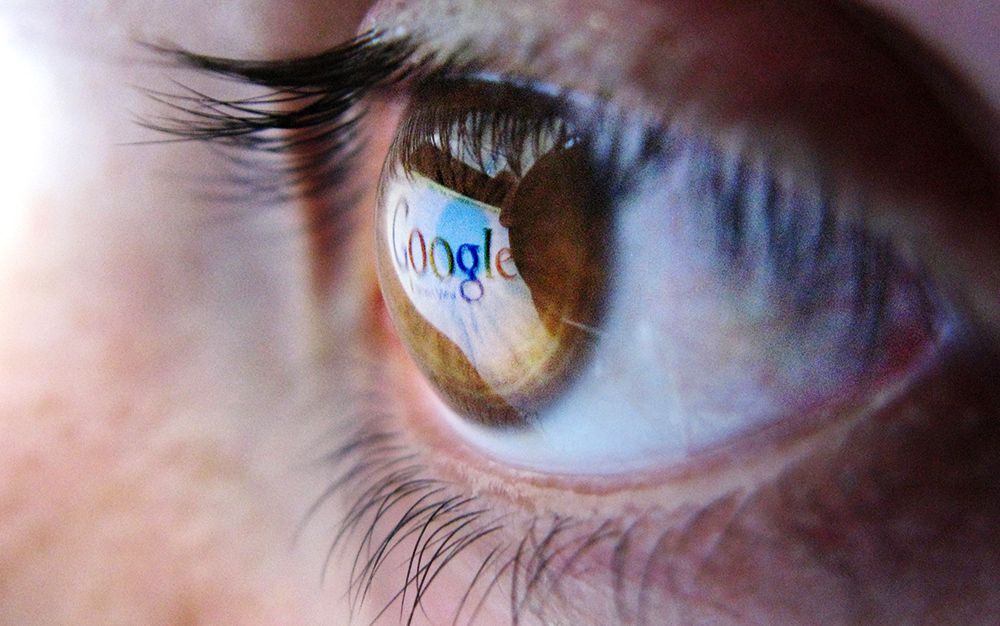
Photo by Corbis
Over the
past century, more than a few great writers have expressed concern about
humanity’s future.
In The Iron Heel
(1908), the American writer Jack London pictured a world in which a handful of
wealthy corporate titans – the ‘oligarchs’ – kept the masses at bay with a
brutal combination of rewards and punishments. Much of humanity lived in
virtual slavery, while the fortunate ones were bought off with decent wages
that allowed them to live comfortably – but without any real control over their
lives.
In We (1924), the brilliant
Russian writer Yevgeny Zamyatin, anticipating the excesses of the emerging
Soviet Union, envisioned a world in which people were kept in check through
pervasive monitoring. The walls of their homes were made of clear glass, so
everything they did could be observed. They were allowed to lower their shades
an hour a day to have sex, but both the rendezvous time and the lover had to be
registered first with the state.
In Brave New World (1932),
the British author Aldous Huxley pictured a near-perfect society in which
unhappiness and aggression had been engineered out of humanity through a
combination of genetic engineering and psychological conditioning. And in the
much darker novel 1984
(1949), Huxley’s compatriot George Orwell described a society in which thought
itself was controlled; in Orwell’s world, children were taught to use a
simplified form of English called Newspeak in order to assure that they could
never express ideas that were dangerous to society.
These are
all fictional tales, to be sure, and in each the leaders who held the power
used conspicuous forms of control that at least a few people actively resisted
and occasionally overcame. But in the non-fiction bestseller The Hidden Persuaders
(1957) – recently released in a 50th-anniversary edition – the American
journalist Vance Packard described a ‘strange and rather exotic’ type of
influence that was rapidly emerging in the United States and that was, in a
way, more threatening than the fictional types of control pictured in the
novels. According to Packard, US corporate executives and politicians were
beginning to use subtle and, in many cases, completely
undetectable methods to change people’s thinking, emotions and
behaviour based on insights from psychiatry and the social sciences.
Most of us
have heard of at least one of these methods: subliminal
stimulation, or what Packard called ‘subthreshold effects’ – the
presentation of short messages that tell us what to do but that are flashed so
briefly we aren’t aware we have seen them. In 1958, propelled by public concern
about a theatre in New Jersey that had supposedly hidden messages in a movie to
increase ice cream sales, the National Association of Broadcasters – the
association that set standards for US television – amended its code to prohibit
the use of subliminal messages in broadcasting. In 1974, the Federal
Communications Commission opined that the use of such messages was ‘contrary to
the public interest’. Legislation to prohibit subliminal messaging was also
introduced in the US Congress but never enacted. Both the UK and Australia have
strict laws prohibiting it.
Subliminal
stimulation is probably still in wide use in the US – it’s hard to detect,
after all, and no one is keeping track of it – but it’s probably not worth
worrying about. Research suggests that it has only a small impact, and that it
mainly influences people who are already motivated to follow its dictates;
subliminal directives to drink affect people only if they’re already thirsty.
Packard had
uncovered a much bigger problem, however – namely that powerful corporations
were constantly looking for, and in many cases already applying, a wide variety
of techniques for controlling people without their knowledge. He described a
kind of cabal in which marketers worked closely with social scientists to
determine, among other things, how to get people to buy things they didn’t need
and how to condition young children to be good consumers – inclinations that
were explicitly nurtured and trained in Huxley’s Brave New World. Guided by social science,
marketers were quickly learning how to play upon people’s insecurities,
frailties, unconscious fears, aggressive feelings and sexual desires to alter
their thinking, emotions and behaviour without any awareness that they were
being manipulated.
By the early
1950s, Packard said, politicians had got the message and were beginning to
merchandise themselves using the same subtle forces being used to sell soap.
Packard prefaced his chapter on politics with an unsettling quote from the
British economist Kenneth Boulding: ‘A world of unseen dictatorship is
conceivable, still using the forms of democratic government.’ Could this really
happen, and, if so, how would it work?
The forces that
Packard described have become more pervasive over the decades. The soothing
music we all hear overhead in supermarkets causes us to walk more slowly and
buy more food, whether we need it or not. Most of the vacuous thoughts and
intense feelings our teenagers experience from morning till night are carefully
orchestrated by highly skilled marketing professionals working in our fashion
and entertainment industries. Politicians work with a wide range of consultants
who test every aspect of what the politicians do in order to sway voters:
clothing, intonations, facial expressions, makeup, hairstyles and speeches are
all optimised, just like the packaging of a breakfast cereal.
Fortunately,
all of these sources of influence operate competitively. Some of the persuaders
want us to buy or believe one thing, others to buy or believe something else.
It is the competitive nature of our society that keeps us, on balance,
relatively free.
But what
would happen if new sources of control began to emerge that had little or no
competition? And what if new means of control were developed that were far more
powerful – and far more invisible
– than any that have existed in the past? And what if new types of control
allowed a handful of people to exert enormous influence not just over the
citizens of the US but over most of the people on Earth?
It might
surprise you to hear this, but these things have already happened.
decides which web pages to include in search results, and how to rank them.
How it does so is one of the best-kept secrets in the world, like the formula
for Coca-Cola
To
understand how the new forms of mind control work, we need to start by looking
at the search engine – one in particular: the biggest and best of them all,
namely Google. The Google search engine is so good and so popular that the
company’s name is now a commonly used verb in languages around the world. To
‘Google’ something is to look it up on the Google search engine, and that, in
fact, is how most computer users worldwide get most of their information about
just about everything these days. They Google
it. Google has become the main gateway to virtually all knowledge, mainly
because the search engine is so good at giving us exactly the information we
are looking for, almost instantly and almost always in the first position of
the list it shows us after we launch our search – the list of ‘search results’.
That ordered
list is so good, in fact, that about 50 per cent of our clicks go to the top
two items, and more than 90 per cent of our clicks go to the 10 items listed on
the first page of results; few people look at other results pages, even though
they often number in the thousands, which means they probably contain lots of
good information. Google decides which of the billions of web pages it is going
to include in our search results, and it also decides how to rank them. How it
decides these things is a deep, dark secret – one of the best-kept secrets in
the world, like the formula for Coca-Cola.
Because
people are far more likely to read and click on higher-ranked items, companies
now spend billions of dollars every year trying to trick Google’s search
algorithm – the computer program that does the selecting and ranking – into
boosting them another notch or two. Moving up a notch can mean the difference
between success and failure for a business, and moving into the top slots can
be the key to fat profits.
Late in
2012, I began to wonder whether highly ranked search results could be impacting
more than consumer choices. Perhaps, I speculated, a top search result could
have a small impact on people’s opinions about things. Early in 2013, with my
associate Ronald E Robertson of the American
Institute for Behavioral Research and Technology in Vista, California, I
put this idea to a test by conducting an experiment in which 102 people from
the San Diego area were randomly assigned to one of three groups. In one group,
people saw search results that favoured one political candidate – that is,
results that linked to web pages that made this candidate look better than his
or her opponent. In a second group, people saw search rankings that favoured
the opposing candidate, and in the third group – the control group – people saw
a mix of rankings that favoured neither candidate. The same search results and
web pages were used in each group; the only thing that differed for the three
groups was the ordering of the search results.
To make our
experiment realistic, we used real search results that linked to real web
pages. We also used a real election – the 2010 election for the prime minister
of Australia. We used a foreign election to make sure that our participants
were ‘undecided’. Their lack of familiarity with the candidates assured this.
Through advertisements, we also recruited an ethnically diverse group of
registered voters over a wide age range in order to match key demographic
characteristics of the US voting population.
All
participants were first given brief descriptions of the candidates and then
asked to rate them in various ways, as well as to indicate which candidate they
would vote for; as you might expect, participants initially favoured neither
candidate on any of the five measures we used, and the vote was evenly split in
all three groups. Then the participants were given up to 15 minutes in which to
conduct an online search using ‘Kadoodle’, our mock search engine, which gave
them access to five pages of search results that linked to web pages. People
could move freely between search results and web pages, just as we do when
using Google. When participants completed their search, we asked them to rate
the candidates again, and we also asked them again who they would vote for.
We predicted
that the opinions and voting preferences of 2 or 3 per cent of the people in
the two bias groups – the groups in which people were seeing rankings favouring
one candidate – would shift toward that candidate. What we actually found was
astonishing. The proportion of people favouring the search engine’s top-ranked
candidate increased by 48.4
per cent, and all five of our measures shifted toward that
candidate. What’s more, 75 per cent of the people in the bias groups seemed to
have been completely unaware that they were viewing biased search rankings. In
the control group, opinions did not shift significantly.
This seemed to be a
major discovery. The shift we had produced, which we called the Search Engine
Manipulation Effect (or SEME, pronounced ‘seem’), appeared to be one of the
largest behavioural effects ever discovered. We did not immediately uncork the
Champagne bottle, however. For one thing, we had tested only a small number of
people, and they were all from the San Diego area.
Over the
next year or so, we replicated our findings three more times, and the third
time was with a sample of more than 2,000 people from all 50 US states. In that
experiment, the shift in voting preferences was 37.1 per cent and even higher
in some demographic groups – as high as 80 per cent, in fact.
We also
learned in this series of experiments that by reducing the bias just slightly
on the first page of search results – specifically, by including one search
item that favoured the other
candidate in the third or fourth position of the results – we could
mask our
manipulation so that few or even no
people were aware that they were seeing biased rankings. We could still produce
dramatic shifts in voting preferences, but we could do so invisibly.
Still no
Champagne, though. Our results were strong and consistent, but our experiments
all involved a foreign election – that 2010 election in Australia. Could voting
preferences be shifted with real voters in the middle of a real campaign? We
were skeptical. In real elections, people are bombarded with multiple sources
of information, and they also know a lot about the candidates. It seemed
unlikely that a single experience on a search engine would have much impact on
their voting preferences.
To find out,
in early 2014, we went to India just before voting began in the largest
democratic election in the world – the Lok Sabha election for prime minister.
The three main candidates were Rahul Gandhi, Arvind Kejriwal, and Narendra
Modi. Making use of online subject pools and both online and print
advertisements, we recruited 2,150 people from 27 of India’s 35 states and
territories to participate in our experiment. To take part, they had to be
registered voters who had not yet voted and who were still undecided about how
they would vote.
Unlike subliminal stimuli, SEME has an enormous impact –
like Casper the ghost pushing you down a flight of stairs
Participants
were randomly assigned to three search-engine groups, favouring, respectively,
Gandhi, Kejriwal or Modi. As one might expect, familiarity levels with the
candidates was high – between 7.7 and 8.5 on a scale of 10. We predicted that
our manipulation would produce a very small effect, if any, but that’s not what
we found. On average, we were able to shift the proportion of people favouring
any given candidate by more than 20 per cent overall and more than 60 per cent
in some demographic groups. Even more disturbing, 99.5 per cent of our
participants showed no awareness that they were viewing biased search rankings
– in other words, that they were being manipulated.
SEME’s
near-invisibility is curious indeed. It means that when people – including you
and me – are looking at biased search rankings, they look just fine. So if right now you
Google ‘US presidential candidates’, the search results you see will probably
look fairly random, even if
they happen to favour one candidate. Even I have trouble detecting
bias in search rankings that I know
to be biased (because they were prepared by my staff). Yet our randomised,
controlled experiments tell us over and over again that when higher-ranked
items connect with web pages that favour one candidate, this has a dramatic
impact on the opinions of undecided voters, in large part for the simple reason
that people tend to click only on higher-ranked items. This is truly scary:
like subliminal stimuli, SEME is a force you can’t see; but unlike subliminal
stimuli, it has an enormous impact – like Casper the ghost pushing you down a
flight of stairs.
We published
a detailed report about our first five experiments on SEME in the
prestigious Proceedings of
the National Academy of Sciences (PNAS) in August 2015. We had
indeed found something important, especially given Google’s dominance over
search. Google has a near-monopoly on internet searches in the US, with 83 per
cent of Americans specifying Google as the search engine they use most often,
according to the Pew Research Center. So if Google favours one candidate in
an election, its impact on undecided voters could easily decide the election’s
outcome.
Keep in mind
that we had had only one shot at our participants. What would be the impact of
favouring one candidate in searches people are conducting over a period of
weeks or months before an election? It would almost certainly be much larger than
what we were seeing in our experiments.

Other types
of influence during an election campaign are balanced by competing sources of
influence – a wide variety of newspapers, radio shows and television networks,
for example – but Google, for all intents and purposes, has no competition, and
people trust its search results implicitly, assuming that the company’s
mysterious search algorithm is entirely objective and unbiased. This high level
of trust, combined with the lack of competition, puts Google in a unique
position to impact elections. Even more disturbing, the search-ranking business
is entirely unregulated, so Google could favour any candidate it likes without
violating any laws. Some courts have even ruled that Google’s right to
rank-order search results as it pleases is protected as a form of free speech.
Does the
company ever favour particular candidates? In the 2012 US presidential
election, Google and its top executives donated more than $800,000 to President
Barack Obama and just $37,000 to his opponent, Mitt Romney. And in 2015, a team
of researchers from the University of Maryland and elsewhere showed that Google’s search results routinely favoured
Democratic candidates. Are Google’s search rankings really biased? An internal report issued by the US Federal Trade Commission
in 2012 concluded that Google’s search rankings routinely put Google’s
financial interests ahead of those of their competitors, and anti-trust actions
currently under way against Google in both the European Union and India are based on similar findings.
In most
countries, 90 per cent of online search is conducted on Google, which gives the
company even more power to flip elections than it has in the US and, with
internet penetration increasing rapidly worldwide, this power is growing. In
our PNAS
article, Robertson and I calculated that Google now has the power to flip upwards
of 25 per cent of the
national elections in the world with no one knowing this is
occurring. In fact, we estimate that, with or without deliberate planning on
the part of company executives, Google’s search rankings have been impacting
elections for years, with growing impact each year. And because search rankings
are ephemeral, they leave no paper trail, which gives the company complete
deniability.
Power on
this scale and with this level of invisibility is unprecedented in human
history. But it turns out that our discovery about SEME was just the tip of a
very large iceberg.
Recent reports suggest that the Democratic presidential candidate
Hillary Clinton is making heavy use of social media to try to generate support
– Twitter, Instagram, Pinterest, Snapchat and Facebook, for starters. At this
writing, she has 5.4 million followers on Twitter, and her staff is tweeting
several times an hour during waking hours. The Republican frontrunner, Donald
Trump, has 5.9 million Twitter followers and is tweeting just as frequently.
Is social
media as big a threat to democracy as search rankings appear to be? Not
necessarily. When new technologies are used competitively, they present no
threat. Even through the platforms are new, they are generally being used the
same way as billboards and television commercials have been used for decades:
you put a billboard on one side of the street; I put one on the other. I might
have the money to erect more billboards than you, but the process is still
competitive.
What
happens, though, if such technologies are misused by the companies that own
them? A study by Robert M Bond, now a political science professor
at Ohio State University, and others published in Nature in 2012 described an ethically
questionable experiment in which, on election day in 2010, Facebook sent ‘go
out and vote’ reminders to more than 60 million of its users. The reminders
caused about 340,000 people to vote who otherwise would not have. Writing in
the New Republic in 2014, Jonathan Zittrain,
professor of international law at Harvard University, pointed out that, given
the massive amount of information it has collected about its users, Facebook
could easily send such messages only to people who support one particular party
or candidate, and that doing so could easily flip a close election – with no one knowing that this has
occurred. And because advertisements, like search rankings, are
ephemeral, manipulating an election in this way would leave no paper trail.
Are there
laws prohibiting Facebook from sending out ads selectively to certain users?
Absolutely not; in fact, targeted advertising is how Facebook makes its money.
Is Facebook currently manipulating elections in this way? No one knows, but in
my view it would be foolish and possibly even improper for Facebook not to do so. Some
candidates are better for a company than others, and Facebook’s executives have
a fiduciary responsibility to the company’s stockholders to promote the
company’s interests.
The Bond
study was largely ignored, but another
Facebook experiment, published in 2014 in PNAS, prompted protests around the world. In
this study, for a period of a week, 689,000 Facebook users were sent news feeds
that contained either an excess of positive terms, an excess of negative terms,
or neither. Those in the first group subsequently used slightly more positive
terms in their communications, while those in the second group used slightly
more negative terms in their communications. This was said to show that
people’s ‘emotional states’ could be deliberately manipulated on a massive
scale by a social media company, an idea that many people found disturbing.
People were also upset that a large-scale experiment on emotion had been
conducted without the explicit consent of any of the participants.
Facebook’s
consumer profiles are undoubtedly massive, but they pale in comparison with
those maintained by Google, which is collecting information about people 24/7,
using more than 60 different observation platforms – the search
engine, of course, but also Google Wallet, Google Maps, Google Adwords, Google
Analytics, Chrome, Google Docs, Android, YouTube, and on and on. Gmail users
are generally oblivious to the fact that Google stores and analyses every email
they write, even the drafts they never send – as well as all the incoming email they
receive from both Gmail and non-Gmail users.
if Google set about to fix an election, it could identify
just those voters who are undecided. Then it could send customised rankings
favouring one candidate to just
those people
According to
Google’s privacy
policy – to which one assents whenever one uses a Google product, even when
one has not been informed that he or she is using a Google product – Google can
share the information it collects about you with almost anyone, including
government agencies. But never with you.
Google’s privacy is sacrosanct; yours is nonexistent.
Could Google
and ‘those we work with’ (language from the privacy policy) use the information
they are amassing about you for nefarious purposes – to manipulate or coerce,
for example? Could inaccurate information in people’s profiles (which people
have no way to correct) limit their opportunities or ruin their reputations?
Certainly,
if Google set about to fix an election, it could first dip into its massive
database of personal information to identify just those voters who are
undecided. Then it could, day after day, send customised rankings favouring one
candidate to just those
people. One advantage of this approach is that it would make
Google’s manipulation extremely difficult for investigators to detect.
Extreme
forms of monitoring, whether by the KGB in the Soviet Union, the Stasi in East
Germany, or Big Brother in 1984,
are essential elements of all tyrannies, and technology is making both
monitoring and the consolidation of surveillance data easier than ever. By
2020, China will have put in place the most ambitious government monitoring
system ever created – a single database called the Social Credit System, in which multiple ratings and records
for all of its 1.3 billion citizens are recorded for easy access by officials
and bureaucrats. At a glance, they will know whether someone has plagiarised
schoolwork, was tardy in paying bills, urinated in public, or blogged
inappropriately online.

As Edward
Snowden’s revelations made clear, we are rapidly moving toward a world in which
both governments and corporations – sometimes working together – are collecting
massive amounts of data about every one of us every day, with few or no laws in
place that restrict how those data can be used. When you combine the data
collection with the desire to control or manipulate, the possibilities are
endless, but perhaps the most frightening possibility is the one expressed in
Boulding’s assertion that an ‘unseen dictatorship’ was possible ‘using the forms
of democratic government’.
Since Robertson and I
submitted our initial report on SEME to PNAS
early in 2015, we have completed a sophisticated series of experiments that
have greatly enhanced our understanding of this phenomenon, and other
experiments will be completed in the coming months. We have a much better sense
now of why SEME is so powerful and how, to some extent, it can be suppressed.
We have also
learned something very disturbing – that search engines are influencing far
more than what people buy and whom they vote for. We now have evidence
suggesting that on virtually all issues where people are initially undecided,
search rankings are impacting almost every decision that people make. They are
having an impact on the opinions, beliefs, attitudes and behaviours of internet
users worldwide – entirely without people’s knowledge that this is occurring.
This is happening with or without deliberate intervention by company officials;
even so-called ‘organic’ search processes regularly generate search results
that favour one point of view, and that in turn has the potential to tip the
opinions of millions of people who are undecided on an issue. In one of our
recent experiments, biased search results shifted people’s opinions about the
value of fracking by 33.9 per cent.
Perhaps even
more disturbing is that the handful of people who do show awareness that they
are viewing biased search rankings shift even
further in the predicted direction; simply knowing that a list is
biased doesn’t necessarily protect you from SEME’s power.
Remember
what the search algorithm is doing: in response to your query, it is selecting a handful of
webpages from among the billions that are available, and it is ordering those webpages
using secret criteria. Seconds later, the decision you make or the opinion you
form – about the best toothpaste to use, whether fracking is safe, where you
should go on your next vacation, who would make the best president, or whether
global warming is real – is determined by that short list you are shown, even
though you have no idea how the list was generated.
The
technology has made possible undetectable and untraceable manipulations of
entire populations that are beyond the scope of existing regulations and laws
Meanwhile,
behind the scenes, a consolidation of search engines has been quietly taking
place, so that more people are using the dominant search engine even when they
think they are not. Because Google is the best search engine, and because
crawling the rapidly expanding internet has become prohibitively expensive,
more and more search engines are drawing their information from the leader
rather than generating it themselves. The most recent deal, revealed in a Securities and Exchange Commission filing in October 2015,
was between Google and Yahoo! Inc.
Looking
ahead to the November 2016 US presidential election, I see clear signs that
Google is backing Hillary Clinton. In April 2015, Clinton hired Stephanie Hannon away from Google to be her chief
technology officer and, a few months ago, Eric Schmidt, chairman of the holding
company that controls Google, set up a semi-secret company – The Groundwork – for the
specific purpose of putting Clinton in office. The formation of The Groundwork
prompted Julian Assange, founder of Wikileaks, to dub Google Clinton’s ‘secret weapon’ in her quest for the US presidency.
We now
estimate that Hannon’s old friends have the power to drive between 2.6 and 10.4
million votes to Clinton on election day with no one knowing that this is
occurring and without leaving a paper trail. They can also help her win the
nomination, of course, by influencing undecided voters during the primaries.
Swing voters have always been the key to winning elections, and there has never
been a more powerful, efficient or inexpensive way to sway them than SEME.
We are
living in a world in which a handful of high-tech companies, sometimes working
hand-in-hand with governments, are not only monitoring much of our activity,
but are also invisibly controlling more and more of what we think, feel, do and
say. The technology that now surrounds us is not just a harmless toy; it has
also made possible undetectable and untraceable manipulations of entire
populations – manipulations that have no precedent in human history and that
are currently well beyond the scope of existing regulations and laws. The new
hidden persuaders are bigger, bolder and badder than anything Vance Packard
ever envisioned. If we choose to ignore this, we do so at our peril.
Edited by Pam Weintraub
For more information about mind control see http://nexusilluminati.blogspot.com/search/label/mind%20control
- Scroll down
through ‘Older Posts’ at the end of each section
Hope you like this
not for profit site -
It takes hours of work every day by
a genuinely incapacitated invalid to maintain, write, edit, research,
illustrate and publish this website from a tiny cabin in a remote forest
Like what you see? Please give anything
you can -
Contribute any amount and receive at
least one New Illuminati eBook!
(You can use a card
securely if you don’t use Paypal)
Please click below -
Spare Bitcoin
change?
Xtra Images by R. Ayana –https://c2.staticflickr.com/8/7419/8732057278_d83dfd2df2_k.jpg
For further enlightening
information enter a word or phrase into the random synchronistic search box @
the top left of http://nexusilluminati.blogspot.com
And see
New Illuminati – http://nexusilluminati.blogspot.com
New Illuminati on Facebook - https://www.facebook.com/the.new.illuminati
New Illuminati Youtube Channel - https://www.youtube.com/user/newilluminati/playlists
New Illuminati’s OWN Youtube Videos
-
New Illuminati on Google+ @ For
New Illuminati posts - https://plus.google.com/u/0/+RamAyana0/posts
New Illuminati on Twitter @ www.twitter.com/new_illuminati
New Illuminations –Art(icles) by
R. Ayana @ http://newilluminations.blogspot.com
The Her(m)etic Hermit - http://hermetic.blog.com
DISGRUNTLED SITE ADMINS PLEASE NOTE –
We provide
a live link to your original material on your site (and links via social
networking services) - which raises your ranking on search engines and helps
spread your info further!
This site
is published under Creative Commons (Attribution) CopyRIGHT (unless an
individual article or other item is declared otherwise by the copyright
holder). Reproduction for non-profit use is permitted & encouraged - if you
give attribution to the work & author and include all links in the original
(along with this or a similar notice).
Feel free
to make non-commercial hard (printed) or software copies or mirror sites - you
never know how long something will stay glued to the web – but remember
attribution!
If you
like what you see, please send a donation (no amount is too small or too large)
or leave a comment – and thanks for reading this far…
Live long
and prosper! Together we can create the best of all possible worlds…
From the New Illuminati – http://nexusilluminati.blogspot.com